
Given today is National Girls and Women in Sports Day AND the fact that the 2026 Milano-Cortina Olympic & Paralympic Games officially begin on Friday, we wanted to share a bit about three of our amazing Next League team members who all happen to be Team USA athletes!
Learn more about Veronica Day, Rachel Rane and Macy Tarlton below.
VERONICA DAY


I am a former member of the U.S. National Skeleton Team, where I competed for Team USA for nine years. During my career, I was fortunate to earn multiple accolades, including National Push Champion, National Start Record Holder, North American Cup Overall Champion, and the Randy Price Sportsmanship Award. I served as the Athlete Advisory Council representative and spent four years as a member of the USA Bobsled & Skeleton Board of Directors. Throughout my career, I lived and trained at two U.S. Olympic & Paralympic Training Centers, Lake Placid, New York and Colorado Springs, Colorado.
I discovered skeleton after watching the sport at the 2010 Vancouver Olympic Games, noting that many athletes shared my track and field background. At that time, I competed for Elon University as a long and triple jumper. At Elon, I was a 5-time school record holder, a 3-time conference champion, named the Southern Conference's MVP, NCAA qualifier, and was later inducted into the university’s Athletic Hall of Fame.
Since retiring from competitive sport, I worked in athlete services at the U.S. Olympic & Paralympic Committee before transitioning into operations/sports technology at Next League for the last 3 years.
Given my background, I also volunteer in local student mentoring programs supporting athlete development. Additionally, I previously led the creation of Crossover for Change, a nonprofit organization that built sports facilities in Uganda, resulting in three completed facilities and expanded access to sport for more than 10,000 girls.
I currently reside in Telluride, Colorado, where I spend my weekends skiing - my enthusiasm for it far outpaces talent 🙂
RACHEL RANE


I started coxing my freshman year of high school and was later recruited to the University of Texas, where I coxed the Varsity 8+ for three competitive seasons and won back-to-back NCAA team championships, including the first in program history.
After my sophomore season, I made my first U23 national team and coxed the U.S. Women’s 8+ to gold at the U23 World Championships in Italy. Post-graduation, I moved into the senior team pipeline and this fall coxed the U.S. Men’s 8+ to a bronze medal at the World Championships in China, the first medal for that boat since 2017. I am also the first woman to ever cox a U.S. men’s eight at a World Championship.
Outside of rowing, I’ve built a career centered on leadership and creativity, freelancing in social media, video, and photography, coaching Division I rowing at Michigan, and now working in operations and marketing roles in San Francisco.
As an LA 2028 hopeful, I’m planning to move to Sarasota to train and fully commit to the next chapter.
MACY TARLTON


Prior to bobsled, I represented the U.S. in Olympic weightlifting. Learning a new sport in my early 20s helped me adapt in the career field more than I realized! Alongside sport, I run a small business specializing in Google listings and SEO, helping business owners improve visibility through Google My Business.
I’m also proud to serve as a spokesperson for Special Olympics and as an athlete mentor with Classroom Champions, a nonprofit that connects Olympic athletes and hopefuls with classrooms worldwide to inspire students throughout their journeys.
I’m based in Charlotte, North Carolina, and currently training and competing in Europe until the 2026 Milano-Cortina Olympic Games are over!
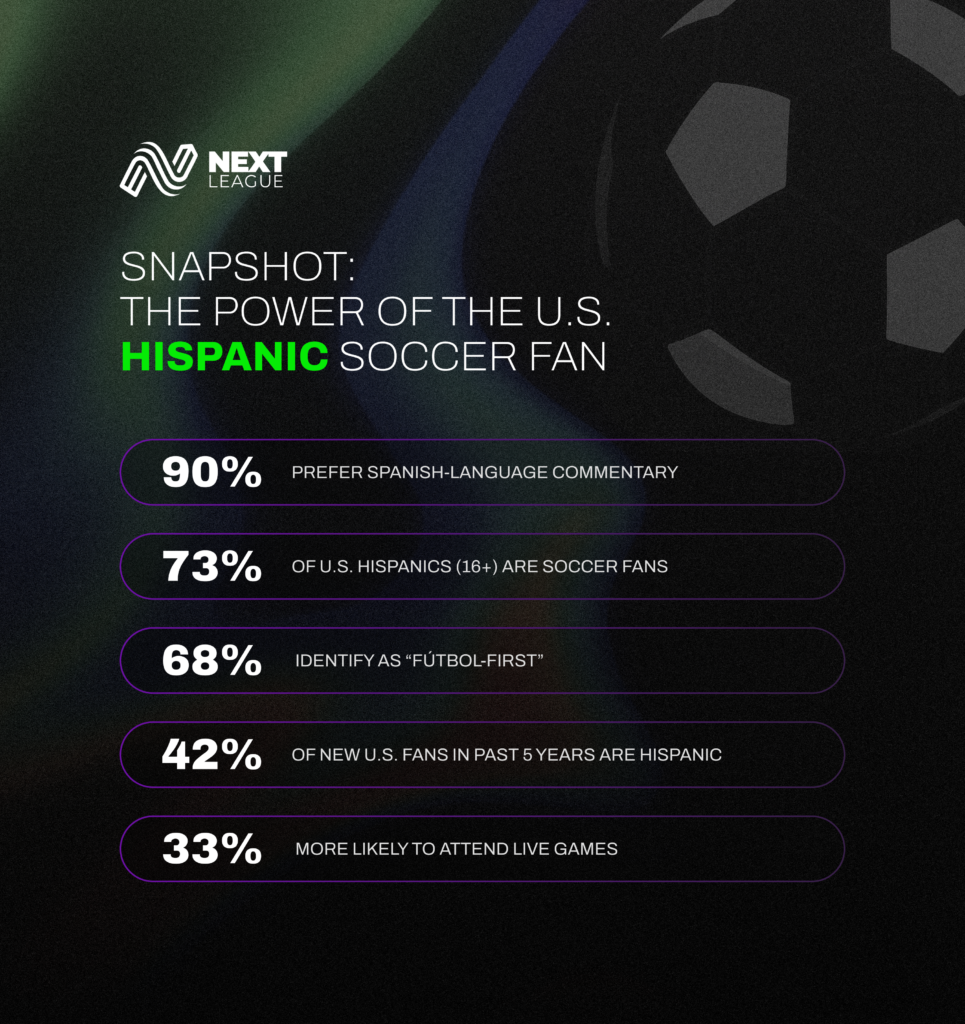
The global soccer industry is placing a bold bet on the U.S. Hispanic fan, and for good reason. With 73 percent 1 of U.S. Hispanics 16 and older identifying as soccer fans, many describe the sport not as a pastime but as a piece of their heritage, something they were born into and are incredibly proud of.
This deep-rooted passion is shaping everything from league strategies and stadium renovations to technology deployment and brand activations. According to For Soccer Research 2, 71% percent of U.S. Hispanic fans say cultural representation directly influences the leagues they support, making bilingual marketing and authentic storytelling essential. As the 2025 “Summer of Soccer” turns to July, the real question becomes: do we truly understand what is driving this audience, and are we doing enough to meet the moment?
Any organization preparing for the 2026 FIFA World Cup and beyond must take note. Ignoring this shift is not just a missed opportunity, it is a strategic mistake. This audience is not only expanding, it is redefining what modern fandom looks like. Bilingual, digital-first, tech-savvy, community-rooted and brand-loyal, Hispanic fans are truly setting the pace for what engagement must look like moving forward.
LEVERAGING EMERGING TECHNOLOGIES
As an organization, we are regularly engaged to help our partners leverage AI and emerging technologies to better understand their fans to maximize revenue and enhance fan experiences. Using these tools and technologies are no longer optional; they are critical to deliver measurable business growth.
For brands and rights holders, real-time data capture and predictive analytics unlock deeper insights into Hispanic fan behaviors: how they attend, watch, share, and buy. AI-powered personalization tailors messaging in ways that reflect cultural nuance and language preference. When layered with modern loyalty strategies (rewards programs, gamified engagement, and exclusive access) the impact goes beyond audience reach. It builds lasting relationships rooted in trust and shared identity.
Now imagine that infrastructure built around the most emotionally invested and commercially underserved fan base in American sports.
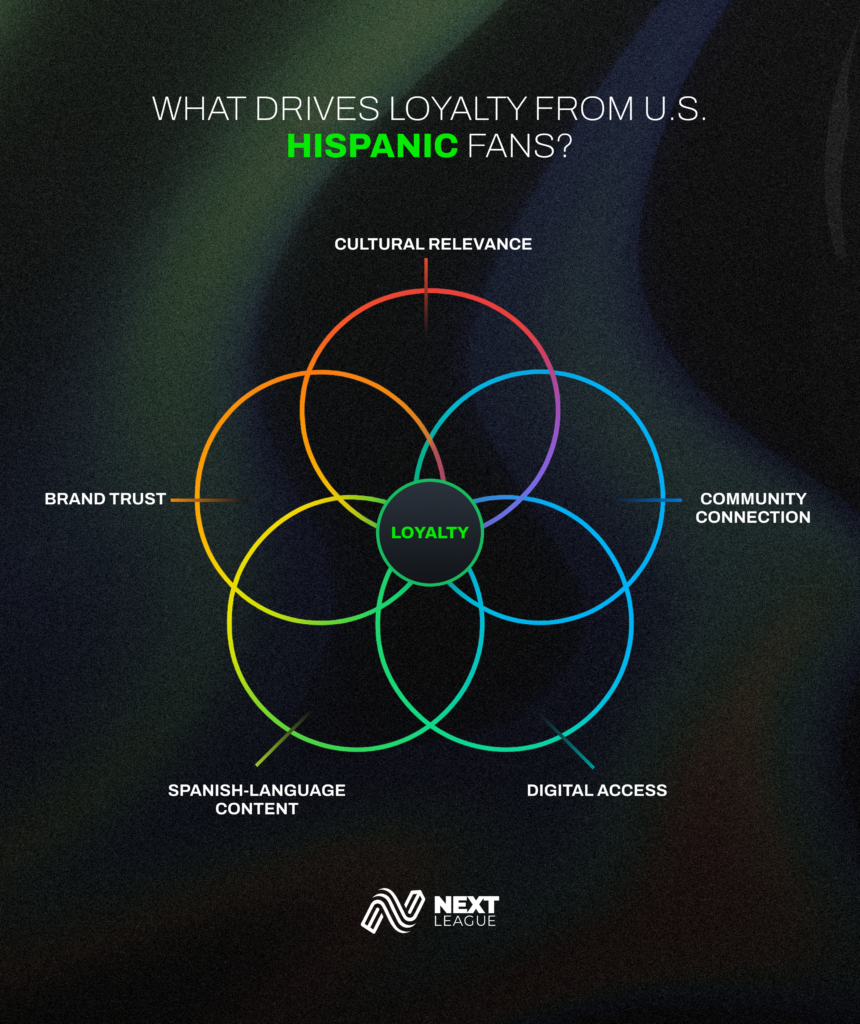
The urgency isn’t speculative, it's backed by data. According to TelevisaUnivision 3, 68% of Hispanic sports fans identify as soccer-first. This signals more than a preference; it represents a cultural connection.
This passion also translates into measurable impact. Nielsen reported U.S. Hispanic fans are 33% more likely to attend live sporting events than the general population, making them critical to matchday revenue and in-stadium experiences. These are not passive viewers; they are deeply engaged fans. More importantly, the growth curve shows what lies ahead as 42% percent of new U.S. soccer fans over the past five years are Hispanic. This audience is not simply sustaining the sport, they are actively reshaping how it is broadcast, marketed, and monetized.
Language plays a foundational role. Spanish-language broadcasts continue to outperform in Hispanic households and are gaining traction among non-Hispanic viewers as well. According to TelevisaUnivision, 64% of U.S. Hispanics believe soccer has become more exciting due to technology improvements and the growth of Spanish-language streaming. Nearly 90 percent of Hispanic fans prefer Spanish-language commentary, and more than 65 percent of non-Hispanic fans say the same.
CONNECTING BRANDS WITH (HISPANIC) FANS
Outside of traditional broadcast television, there are more opportunities today than ever before for brands to connect with Hispanic fans. According to the Nielsen and Latinos in Sports report 4 Soccer has become a digital-first sport within this community with 69% live streaming matches, 49% watching highlights, and Hispanic fans being 38% more likely to use TikTok for sports content than the general public. These are not emerging trends, they are current expectations that are already reshaping how soccer is consumed, shared, and commercialized.
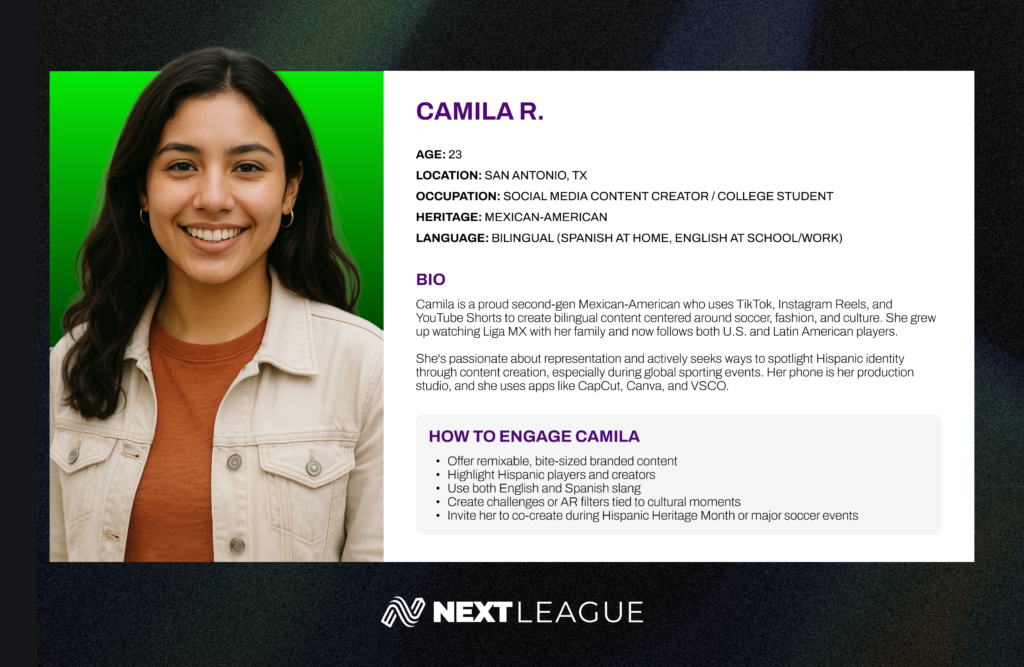
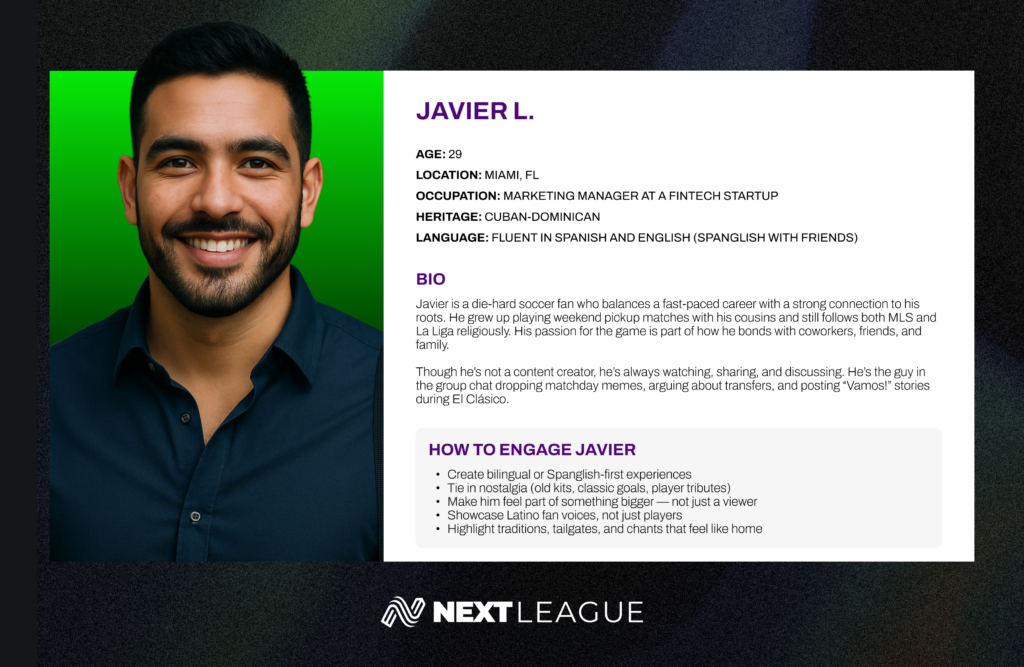
To build effective strategies that engage and capitalize on today’s Hispanic demographic, it is critically important to dive deep into who these fans truly are. At Next League, we spend considerable time building user personas that help illustrate the unique motivations, habits, and cultural nuances that drive fan engagement. By defining a few key personas, like the bilingual Gen Z creator and the legacy fan with deep generational ties, we can shape strategies that are more relevant, personalized, and effective across platforms. Doing so successfully can and will unlock new revenue opportunities for brands.
The data is clear. The audience is ready. And the moment is now.
The world is not just betting on U.S. Hispanics to grow the game; it is relying on them to define its future. With a calendar full of marquee events and billions of sponsorship dollars on the line, success will come down to one key decision: whether leagues, brands, and broadcasters are prepared to meet Hispanic fans where they are—culturally, digitally, and authentically.
Footnotes
Affina, a fusion of fan-engagement platform CrowdPlay and card-linked offer specialist Rethink Loyalty, has launched a “third way” in sports loyalty programs. Recognizing that many teams lack the in-house resources to develop and operate sophisticated loyalty systems, Affina delivers a fully managed solution. It combines gamified fan interaction (like trivia and QR-code rewards) with funding from external card-linked offers and provides hands-on program management. Since its December 2024 merger, the Boston‑based startup has doubled its client base annually, adding NBA, NHL, Fanatics, and soon an NFL club, and recently closed a seven‑figure Series A. Affina’s unique managed‑services model helps teams avoid past pitfalls, proving loyalty programs can now be sustainable and scalable
“People don’t quit jobs—they quit bad managers.”
It’s a phrase we’ve all heard, and for good reason: managers play a pivotal role in shaping the employee experience. They’re not just leading projects—they’re supporting the people doing the work. At their best, people managers foster engagement, satisfaction, and growth across their teams. At their worst, they’re often the reason talented individuals walk away.
At Next League we’ve always understood this truth, but Gallup’s State of the Global Workplace 2025 report makes it clearer than ever; manager engagement is no longer a nice-to-have—it’s a business imperative. When managers struggle, so do their teams. And when managers thrive, they create a ripple effect that lifts everyone around them.
The State of the Global Workplace 2025 report delivers a sobering message; global employee engagement has dropped to 21% from 23% last year. Even more concerning is that manager engagement is in sharp decline—from 30% to 27% globally—signaling a ripple effect that threatens team performance, retention, and business outcomes.
Why does this matter so much? Because managers account for 70% of the variance in team engagement. When our managers are supported, their teams thrive. When they’re not, disengagement spreads.
That’s why we invested early in our managers, launching Think Like a Coach in 2024. This year-long development program is rooted in the belief that great managers are great coaches—clear communicators, emotionally intelligent leaders, and trusted guides through complexity and change.
Our curriculum combines monthly sessions led by internal leaders and external experts, covering high-impact topics like emotional intelligence, difficult conversations, active listening, delegation, feedback, and situational leadership.
Our first cohort finished strong, and we’re gearing up to launch our second round this summer. This isn’t just a training series—it’s an important way we grow talent. It’s our way of saying that leadership isn’t about hierarchy but connection. And we’re setting up our managers to lead with clarity, care, and confidence.
The result? A stronger, more confident community of managers who feel supported and empowered—not just to lead but to grow.
Here’s what a few had to say:
“In a time of constant industry change and uncertainty, the manager training program has been a huge support. It empowered managers to navigate complexity with confidence and adapt with empathy. Thanks to this program, I feel better equipped to lead through diverse challenges with creative solutions—while keeping people at the center of every decision.”
“The management training program helped me slow down, listen more, and lead with more empathy, clarity and confidence.”
“The Think Like a Coach program sharpened my leadership instincts and gave me the confidence to lead more intentionally.”
“I’m really grateful for having this course, it definitely helped me to grow my theoretical knowledge, the practical exercises were great and fun, and it also showed me how others are dealing with similar problems, and how awesome our team is.”
At Next League, we don’t just architect and operate complex technologies for the largest sports brands in the world—we build community and culture for our people. Engagement is everyone’s responsibility and when we invest in our managers, we set the tone for an organization where people thrive.
Gallup estimates that global engagement would unlock $9.6 trillion in productivity worldwide if it rose to best-practice levels. That’s not just good culture - that’s good business.
We don’t just work in a people-first industry—we are a people-first organization. For our clients, for our teams, and for every individual who’s building the future of sports and technology with us.
We keep showing what’s possible when we put people first.
It's official. College athletes are about to get paid—and I’m not talking about NIL crumbs or free meal swipes at the training table. We’re talking direct revenue-sharing payments from schools. Real checks. Like, “Uncle Sam’s watching” checks.
The recent House v. NCAA settlement means schools could be shelling out around $20 million a year to their athletes. That’s right—college campuses are about to look a little less like institutions of higher learning and a little more like tax brackets. And while the headlines are all about justice, fairness, and finally giving athletes their due (amen to that)… let’s talk about the other wave this is about to create.
Growing up I looked at the NFL or NBA as the mountaintop. Now? College is the new professional league. Parents are going to start treating Pop Warner and AAU like private equity firms. We’ll soon be hearing things like “We invested early, we expect a return.”
Imagine how wild it's already been on the sidelines. Now throw $200,000 a year in potential earnings into the mix. Moms and dads aren’t yelling just for playing time anymore—they’re yelling over wages. “Why is my son only getting 12 snaps, Coach?! That’s future revenue sitting on the bench!”
Youth sports were already intense. This just took it from “competitive” to “Shark Tank meets Friday Night Lights.”
And here’s the thing that makes me pause: what does this do to the kids?
These young athletes are already under an immense amount of pressure. You’ve got 16-year-olds getting recruited on TikTok, ranked by strangers online, and now—potentially—valued like they're on the free-agent market. Don’t believe me? Just imagine an eighteen-year-old college kicker who misses a field goal and then spends the next 24 hours getting hate DMs because some fan lost a $30 parlay.
The NCAA even had to roll out a TV ad talking about harassment of athletes. And trust me, there’s going to be a lot more coming.
We’re selling dreams, sure. But pressure is part of the price tag. And for every athlete cashing in, there are thousands more wondering why they're not. We better be ready with more than just highlight reels and Hype House NIL collectives. These kids will need support—mental, emotional, and financial literacy – like never before.
Let’s talk about the new class system this creates. We're going to see a college environment where one athlete makes $2 million a year and the guy next to him gets $100,000. While this dynamic currently exists in pro sports, it will be new to college. In the NFL, there’s a clear class structure in the locker room. Players know who earns what, and why — it’s understood, accepted, and managed professionally. In college, that structure doesn’t exist. The transfer portal and NIL have introduced new variables and external voices — parents, agents, influencers — that impact player decisions in real time.
Without established hierarchies or standardized contracts, expectations can spiral and internal cohesion becomes harder to maintain. The result is a dynamic where players are constantly evaluating their value based on outside noise, not an established system. Only coaches know what this can do to a team that requires everyone's buy in on every play.
Then comes the real twist: What happens when college athletes making NFL-type money realize life after sports doesn’t come with direct deposit? It’s hard to go from $20,000 a month in college to $60,000 a year in corporate America. I saw this first-hand with a lot of guys who struggled to transition to life after their playing careers ended because the lifestyle was the first thing they built—and the last thing they could let go of.
This is déjà vu. Only now, we’ve moved the problem up a level.
I’m happy college athletes are finally getting paid. We earned it. But let’s not pretend this doesn’t come with new challenges. We’re shifting the entire sports economy—and youth sports is about to become a high-stakes audition tape. Parents will spend more. Kids will feel more pressure. Mental health will matter even more. And we’ll need to be ready to help athletes not just win now—but transition later.
As someone who’s lived through it, I can tell you: the hardest part of the game is what comes after it ends.
“How do we serve our current revenue-generating fans while also capturing the next generation?"
We frequently hear this type of question. Engaging fanbases with different behavioral patterns and psychographics certainly increases operational complexity. Understandably, many sports teams and leagues have focused on today’s revenue generating fans. However, your fan engagement strategy doesn’t have to be an “either/or” decision between engaging today’s core sports fans (Millennials and older) or the next generation (Gen Z and younger).
Teams and leagues can efficiently cater to multi-generational fan needs by applying data1-driven automated personalization alongside their integrated strategies and tactics. This type of approach is crucial to position your organization for sustainable growth as Gen Z emerges and becomes an increasingly critical consumer over the next decade.

Sports organizations, who haven’t been intentional about engaging Gen Zers, are at risk of missing out on this important emerging consumer. The youngest Gen Zers are reaching adulthood within the next decade. Further, U.S. Gen Zers already have an estimated annual spending power of $360 billion2. In comparison to other generations, Gen Zers’ expenditures are also projected to grow the most through 20353.
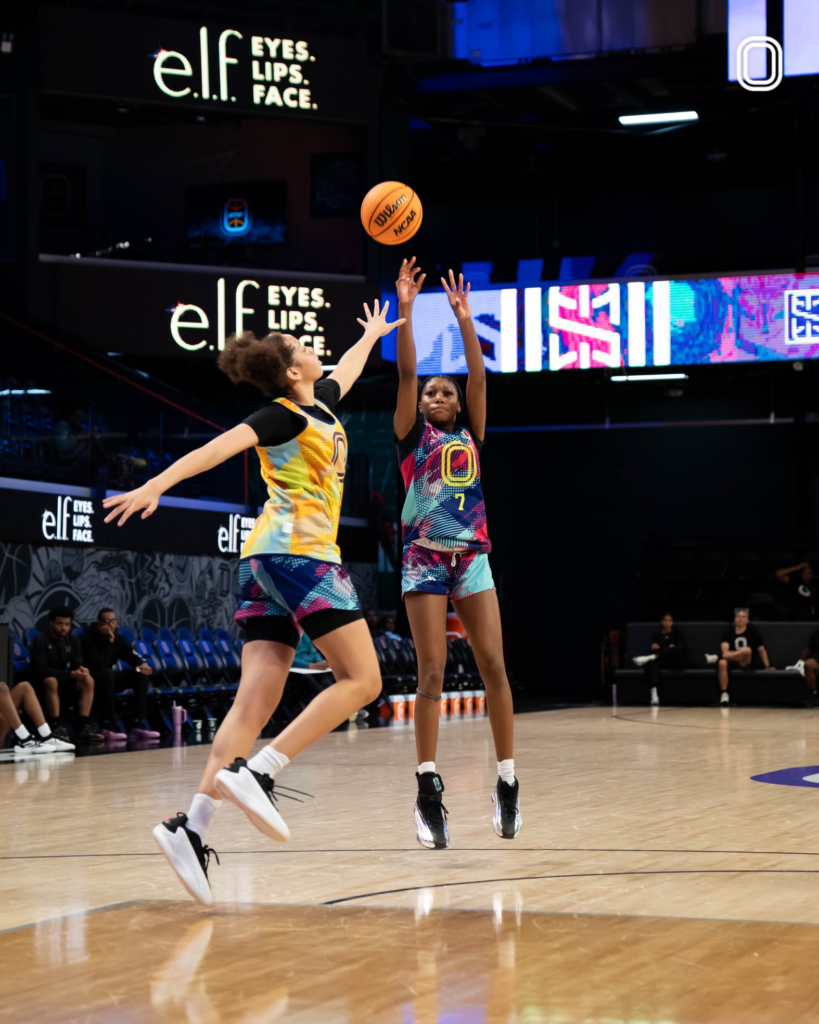
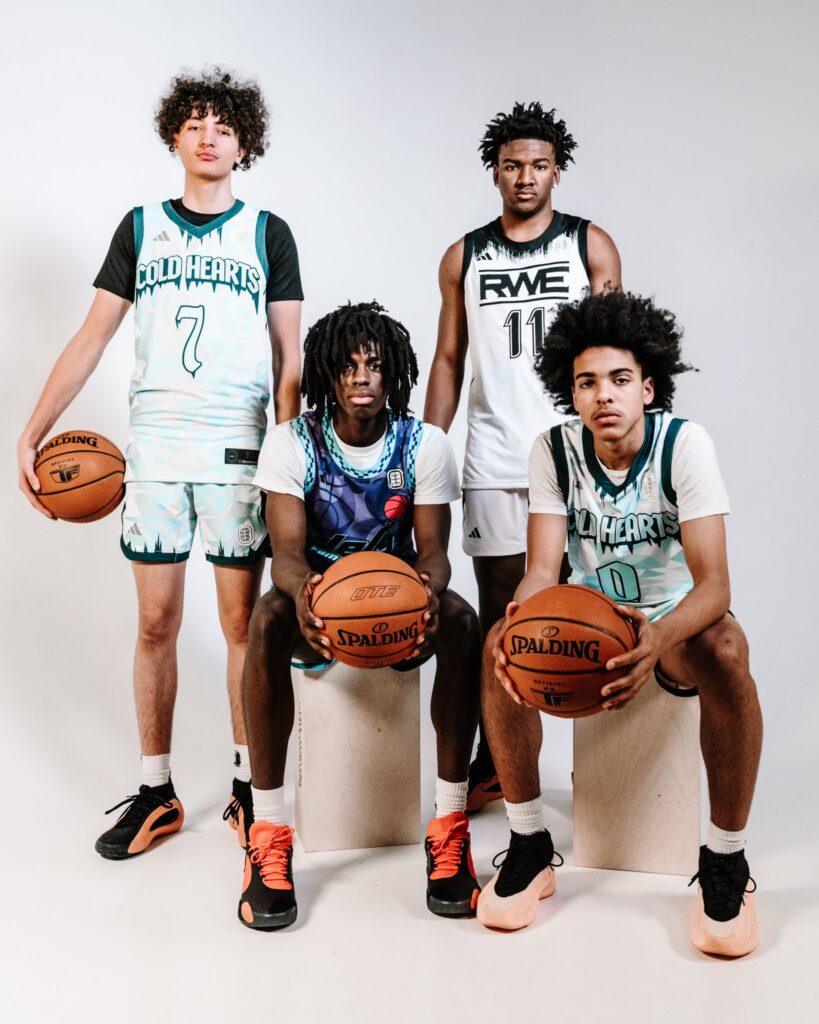
This emergence of Gen Z as a crucial consumer is directly impacting key sports revenue streams, from media and ticket sales to sponsorships and beyond. Gen Zers’ digital-first consumption habits have already contributed to the disruption of the media landscape. Their attraction to live sporting events is demonstrated by their willingness to attend games more consistently and pay higher ticket prices4. Additionally, as authenticity-driven, diverse, and socially conscious consumers, Gen Zers can be elusive to brands, so sports organizations that display meaningful engagement with this demographic are securing impactful sponsorship deals (e.g., Overtime’s range of partnerships from e.l.f Cosmetics to Adidas).
Three challenges that we often see when helping teams and leagues engage multiple generations:
Establishing the urgency of engaging Gen Z, securing internal alignment, and utilizing technology to scale your efforts are crucial steps to capturing the next generation of fans.
Among the ways we support clients’ needs to capture the next generation of fans is by helping them optimize their personalized fan engagement efforts. We often start this support by confirming the potential value of such an effort, as understanding the associated upside (and risk) helps leaders drive broad internal alignment. Once this alignment is established, we frequently conduct a personalized fan engagement readiness review. More context on these key steps outlined below:

Once we complete this type of review and support with the technology implementation, a client may, as an example, have the ability to send an exciting targeted player free agency update email combined with a season ticket upgrade offer to a dedicated Gen X fan, while simultaneously triggering a short-form vertical video and a single-game ticket offer to a new Gen Z fan. Beyond owned and operated digital touchpoints, on social media for example, where individual fan profiles are unavailable, high-level insights can be used to inform scalable tailored content and community management strategies.
The sports industry is already implementing a variety of strategies and tactics for reaching and engaging the next generation of fans - from integrating business models (e.g., League One Volleyball (LOVB)’s youth and professional structure) and fostering influencer/media collaborations (e.g., NBA Creator Cup and NWSL-Overtime), to leveraging modern media distribution (e.g., combination of streaming and legacy broadcast) and creating new or updating the in-game product (e.g., TGL and MLB)

These types of efforts, coupled with optimized technology and processes for personalized fan engagement, will be key to scaling the acquisition of Gen Z, a critical segment of fans for your organization's future success.
Are you ready to transform your fan engagement approach?
The above article is also available for PDF download here.
Acknowledgement
This research was led by Juan De Jesus in collaboration with Shripal Shah and Bora Nikolic. It was edited by Joanna Solowey.
Sources
As a female born and raised in Brazil, my passion for the sport of “Futebol” traces back to my childhood memories formed during the 1994 World Cup. After moving to the United States as a teenager, I’ve personally witnessed both the remarkable rise of soccer in this country and the transformative cultural role it has played since then.
Futebol has always been in my DNA. The passion for the Canarinhos, the local reference to the iconic yellow and green jersey with five winning stars, is something I will always treasure. Reflecting on the impact of the 1994 Men’s World Cup takes me beyond just the final penalty kick where Brazil defeated Italy. As a young fan, I witnessed the game through the lens of national glory—the pure fandom, the celebrations with vibrant face paint, and the fireworks (while the adults likely enjoyed their caipirinhas).
Over the past three decades, the growth of soccer in the United States has been a phenomenon to watch. The two World Cups held in the U.S. during the 1990s had a profound impact on the sport’s growth and popularity in the country. From the pivotal 1994 FIFA World Cup to the rise of MLS and the explosive growth of the NWSL, ‘The Beautiful Game’ has transitioned from a niche sport to a prominent part of the American sporting culture.
Today, with less than 450 days until the 2026 FIFA World Cup, the start of the 30th season of MLS and the beginning of the NWSL season underway, the stage is set for soccer to reach unprecedented heights here in the U.S.
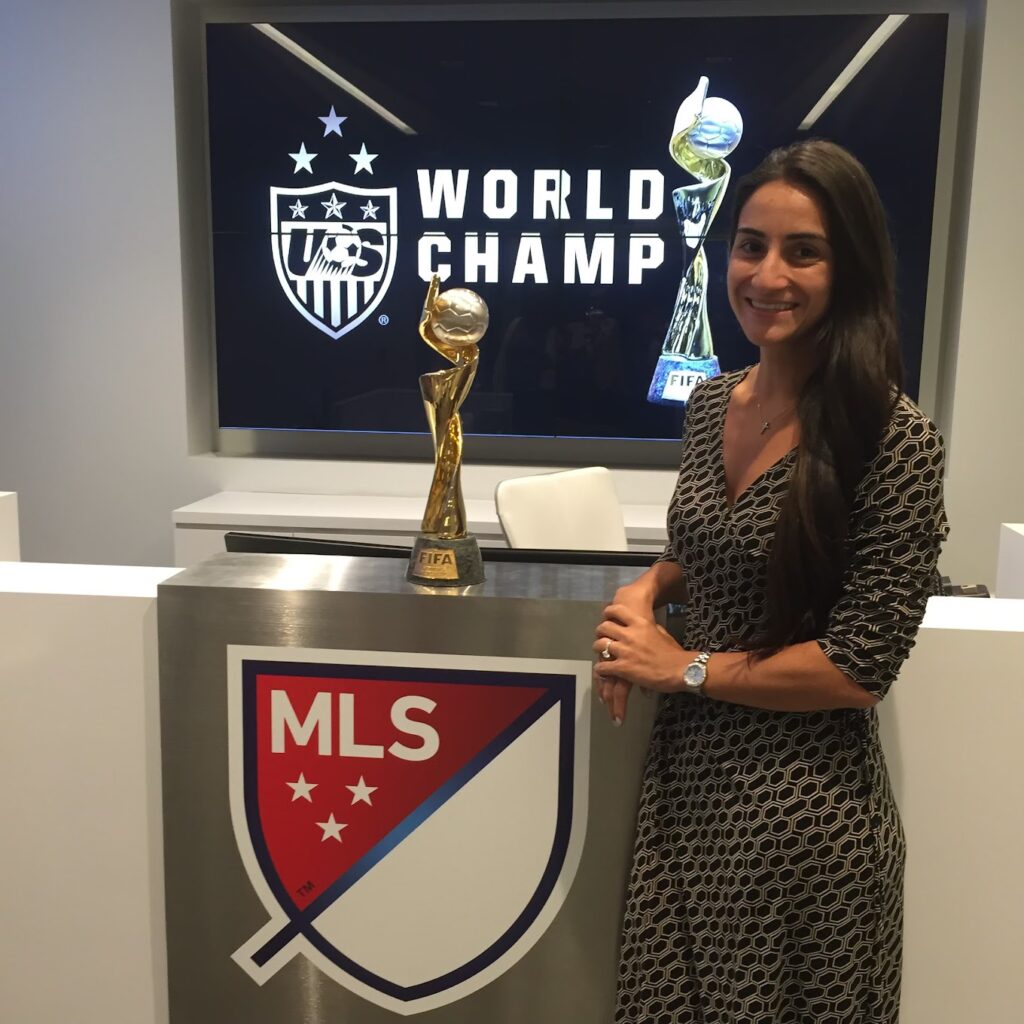
The 1994 World Cup ignited interest by showcasing its global appeal and drawing diverse audiences. At the time the U.S. was experiencing a demographic shift with a growing Latino population, which now makes up about 19.1% of the U.S. population1. This shift fueled participation in soccer, as many Latinos brought their passion for the sport, creating a strong base of players and fans. Additionally, the 'soccer mom' phenomenon, which saw a surge in youth participation driven by middle-class families, especially in suburban areas, became a defining feature of the sport’s development.
The substantial growth of youth soccer participation has continued, with outdoor soccer participation in the United States reaching over 14 million people in 2023, an 8% increase2 from the previous year, and illustrates the sport's remarkable expansion. Post-1999, given the success of women’s soccer and a more soccer-engaged population, participation numbers soared, reflecting the growing integration of soccer into the American sporting landscape.
While the previous World Cups helped ignite interest in and participation of soccer here in the U.S., I believe the 2026 World Cup will finally establish the U.S. as a global soccer powerhouse. The fans will feel it, the athletes will experience it and investments will continue to come in.
The global soccer fans will see, hear and feel this passion. FIFA is currently projecting the 16 host cities are expected to welcome over 5 million fans during the month-long tournament3. For those lucky enough to attend a match in person, they will get to experience some of the most exciting venues to watch a soccer match from Atlanta and Kansas City to Dallas and Los Angeles. Watch parties will pop up all over the continent, rivalling those held in other countries. The energy and enthusiasm will be tangible from coast to coast.
The athletes themselves will train at some new (or newly renovated) soccer-specific venues including the KC Current and Atlanta United’s Training Facilities. The world’s best soccer players will experience these best-in-class facilities - from training grounds and weight rooms to the treatment centers and classrooms. Team facilities in the U.S. are, on average, far superior to those overseas; this will be an amazing opportunity for the international players to experience the amenities and services American teams can take advantage of.
Investments into the sport will continue. The globalization of soccer has also brought people closer, fostering cross-cultural connections and shared experiences. As the sport continues to grow, it has proven to unite communities worldwide and strengthen the sport’s global appeal. People crave connectivity and shared experiences; expect more money to flow into the sport to keep up with the demand.
Soccer has transformed the sporting landscape by becoming a global force that connects diverse cultures. Its rise in popularity, particularly in North America, has reshaped fan engagement, media coverage, and the sports industry as a whole. With the FIFA World Cup in 2026, the 2028 Olympics in Los Angeles and the most recent announcement of the FIFA Women’s World Cup 2031 (in North America) on the horizon, soccer is poised for major growth. Next summer’s World Cup, hosted by the U.S., Mexico, and Canada, will elevate the sport’s profile, while the Olympics will further boost its visibility, especially with the rise of women’s soccer.
As a lifelong Futebol fan personally and professionally, I am so excited to witness, and be part of, the global growth of soccer and the role it has in continuing to unite communities and propel itself forward.
Footnotes
Written by Brian Jones
College Football Analyst, CBS Sports
College Sports, Next League
We’re entering a new era where athletes don’t just play the game, they tell the story. And the industry is only beginning to catch up.
I just returned from my first trip to the annual NAB Show (and its Sports Summit more specifically) in Las Vegas — one of the largest gatherings of industry executives working behind the scenes in sports, media, and entertainment. While a lot of the technology was over my head from an engineering standpoint, I saw something that matters to everyone in sports: the entire system of content creation, delivery, and fan interaction is changing — fast.
This shift isn’t just about camera angles or better graphics packages. It’s about how stories get made, who tells them, and how fans interact with what they’re watching. That matters more than ever — not just for the networks, but for schools, teams, brands, and athletes themselves.
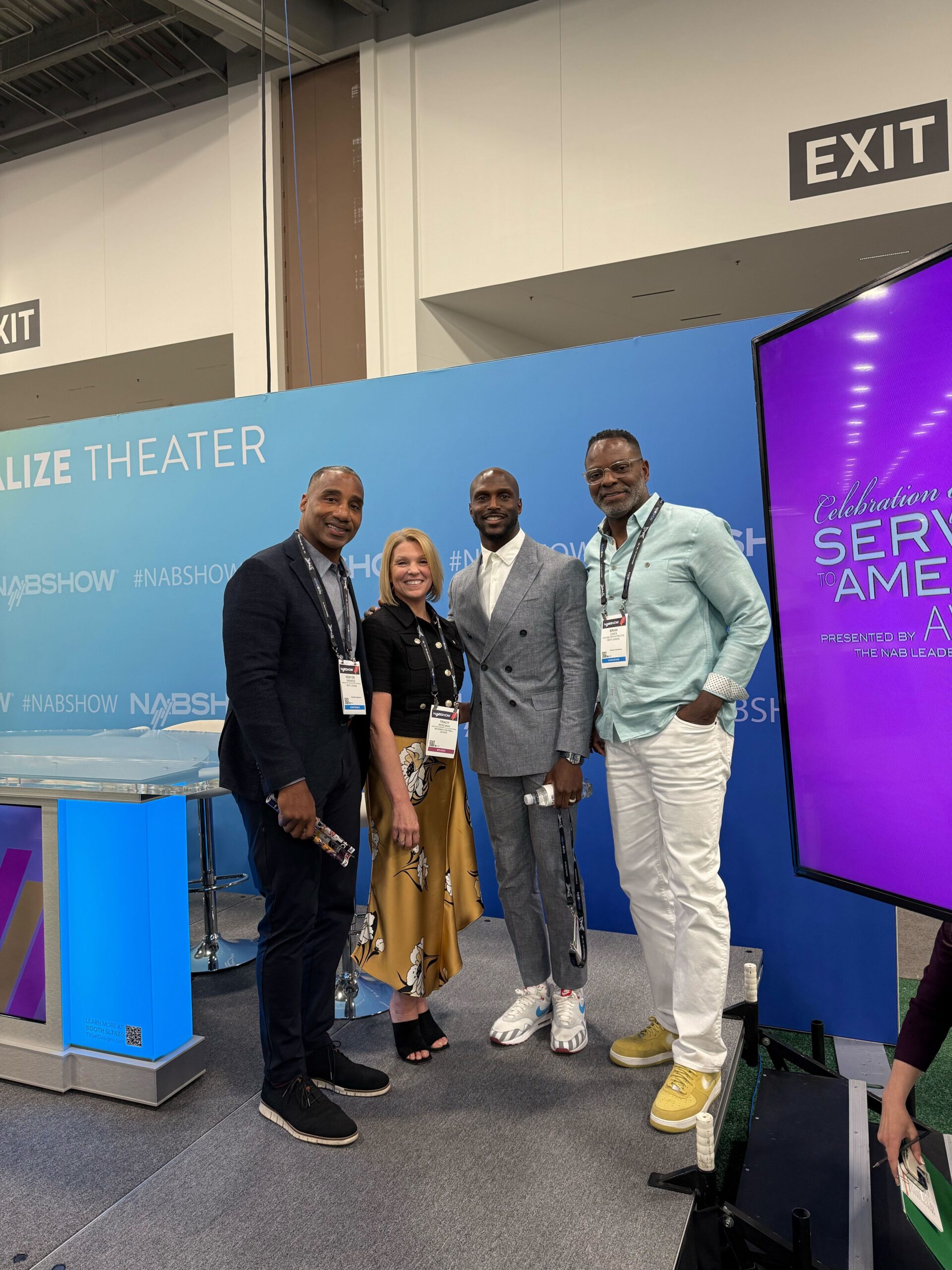
What stood out most to me was the growing focus on enabling creativity at a very basic level. Professional-grade tools — like the kind Adobe is building and highlighting in their Creator Labs — are starting to show up directly inside athletic departments. At the same time, schools are investing in on-campus production studios that give athletes and creative teams the power to produce high-quality content in real time. That’s not just about slick highlight reels. It’s about recruiting, fan engagement, brand-building, and in a lot of cases, helping athletes create real commercial value in the NIL era.
But access alone isn’t enough. At Next League we understand how important it is to build systems supported by process — not just drop in tools. If you don’t have a plan for content workflows, data capture, monetization, or sponsor integration, you’re just adding more complexity. The organizations that win in this space will be the ones that connect the dots across departments — and turn creative opportunity into long-term value.
One area I see gaining traction is how schools and teams are extending the live game experience digitally. Think second-screen experiences built for universities — school-branded watch parties, live chats, and digital spaces that bring fans together while the action unfolds. These aren’t just nice-to-haves. They’re fast becoming strategic tools for engagement, data capture, and sponsor activation.
These aren’t massive tech lifts. In many cases, they’re simple products that help drive engagement, grow databases and activate sponsor value. And when done right, they open the door to new revenue and deeper fan connection — without requiring a full production overhaul.
What I saw at NAB — and what we’re building toward every day at Next League — is a clear shift: from traditional, top-down production to a model where athletes, schools, and creative teams are driving the storytelling.
This hits home for me in three distinct ways:
The future of sports media and the evolution of sports storytelling won’t be built on any one platform or product. It’ll be shaped by a strategy that leverages technology, but is not held hostage by it. Sports organizations with a clear strategy, measurable KPIs and technology investments that are focused on outcomes will lead the way in 2025 and beyond. The right use of technology allows you to move faster, tell better stories, and engage more people in meaningful ways.
This shift is already happening. I can tell you this: organizations that are experimenting today are the ones who will be leading the industry tomorrow.
At Next League, we talk often about building digital solutions for What’s Next in sports. But the question every marketer, league, and team should be asking is: who knows what’s next before anyone else does? The answer is right in front of us - the athletes themselves.
For too long, the industry has treated athletes as temporary assets - as endorsement deals, autograph appearances, or social media and sports moments that rise and fade. But the truth is, athletes are the #1 asset for any sports business, and this will never change.
Athletes sit at the center of the investment, innovation, and energy that power the sports industry forward. Entire ecosystems have been built on our ability to attract, influence, and engage fans and the general public at large. While Name, Image, and Likeness has a shelf life, as a former professional athlete, I can assure you the concept of Athlete Intelligence does not.
Over years spent on the field, inside locker rooms, front offices, and boardrooms, athletes accumulate knowledge at a level few sports business executives will ever reach. It’s the kind of insight you only gain by living it - learning the business from the ground up and seeing how it truly operates from the inside out. And based on what I’ve experienced firsthand, the athletes who pay attention to this while they’re playing - the ones who stay curious about the business that surrounds them - are often the ones who thrive in post-playing careers. This intelligence is permanent, powerful, and largely untapped.
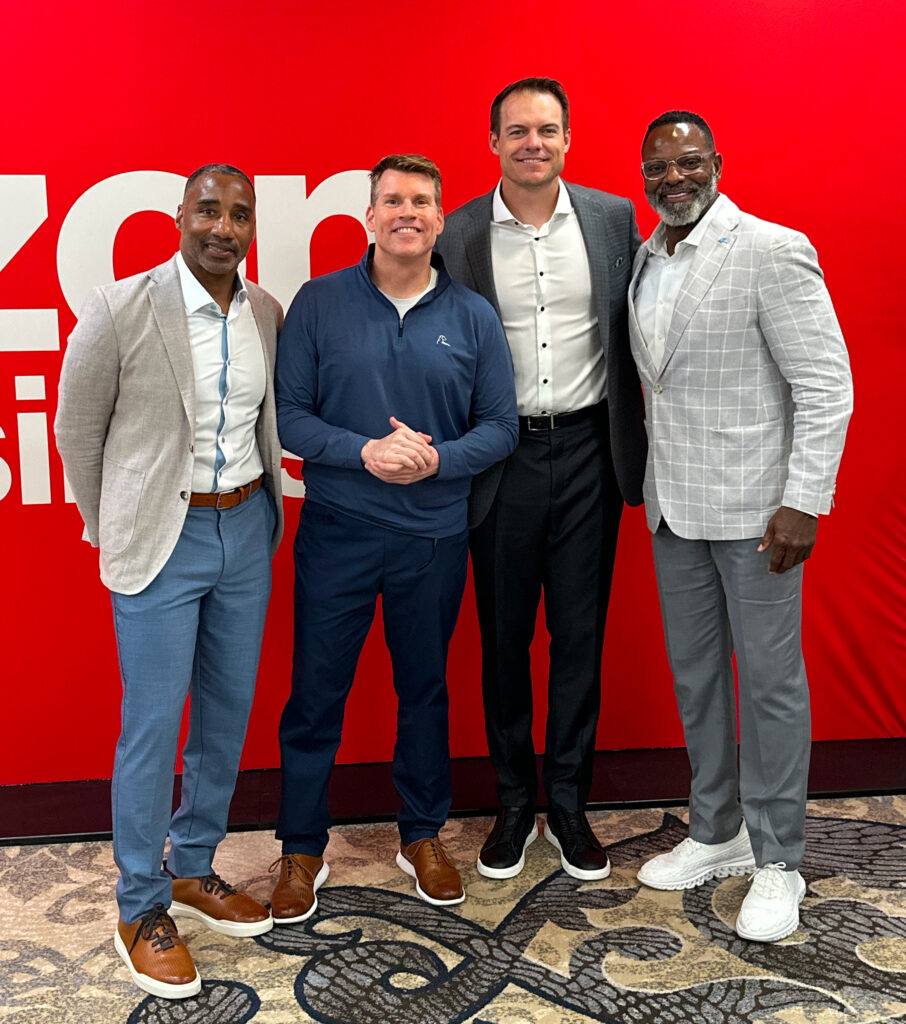
Throughout my career, I’ve watched brands and tech companies build products, services, and marketing campaigns for athletes often without ever sitting down and engaging us first. Rarely are we asked how we think about fan engagement, or what tools and technologies could help us perform better, recover faster, or build lasting impact. We’re often invited into the room to invest, endorse, or entertain, but not to advise, design, or lead. That disconnect isn’t just frustrating, it’s a missed opportunity.
These missed opportunities have led to some of the most meaningful experiences in my career.
Years ago, I began to notice how athletes’ medical information was handled. This personal information was shared across teams, coaches, and staff in ways that would never be acceptable for any other patient. Realizing this disconnect, I took the time to truly learn HIPAA guidelines and how compliance was often overlooked or ignored in professional sports.
That experience helped me recognize the need for a better system - one that respected athlete privacy, brought transparency to data sharing, and met medical standards. From that insight, I helped build the first HIPAA-compliant electronic medical record system in professional sports. We didn’t wait for the industry to catch up, we created the future standard. That is what Athlete Intelligence looks like when put into action.
It’s the same thinking that guided us as we built Edge3. Teaching an AI model to understand what is most important to players and coaches doesn’t start in a boardroom. It starts on the practice field, in the film room, and in the mind of athletes and coaches who have spent years perfecting their craft. We didn’t ask athletes to lend their name to the product. We asked them to teach it and to share the intelligence that only comes from personal experience. That knowledge became part of the system itself - proof that Athlete Intelligence is not anecdotal.
We’ve applied the same approach working alongside Verizon to develop a new Sideline AI technology for college and professional teams. That technology didn’t come from a product roadmap. It came from conversations with athletes and coaches who knew what they needed to make adjustments in real-time - how information should flow, what distractions to avoid and what clarity looks like when decisions have to be made in seconds. Verizon came to understand that real innovation starts when you stop building around athletes, and start building with them.
This is not just about past success; it’s about what comes Next.
Right now, leagues and broadcasters are monetizing athletes’ data, from biometric readings to performance metrics, without involving the athletes themselves. Watch any NFL Combine broadcast and you’ll see current prospects measured against past player benchmarks. Those benchmarks are intellectual property yet the athletes these are based off of are not compensated.
In betting markets, live player tracking data drives engagement and revenue, yet the players have no seat at the table. But, we believe, not for long. The future of athlete data is all about licensing, ownership, and long-term monetization. The conversations we’re having now with brands and leagues are about how to lead that shift, not react to it.
Teams have a role to play in changing this dynamic too. We believe if they truly want to understand what their fans care about, they should engage their athletes first. Athletes engage with fans every day - on the field, in the community, and on social media. We hear from fans directly and know our authenticity is what helps drive engagement and loyalty. We know the rhythms of a season, the moments where connection matters most, and the unspoken dynamics between team and fan. That’s intelligence no CRM platform can replicate.
At Next League, we turn this intelligence into action. We help sports organizations succeed by delivering tailored solutions that drive results. Our mission is to deliver What’s Next - platforms, tools, and ecosystems that are co-created by athletes, informed by their expertise, and designed to drive long-term value for brands, teams, and leagues alike.
The companies that will lead the next decade of sports innovation are not the ones extracting data from athletes and turning it into dashboards. They are the ones who sit across the table and ask, “What do you know that we don’t?”
We’ve proven it. We’ve built it. And we are scaling it. The question is no longer whether this shift is happening, it’s who you will trust to guide you through it?

JUSTINE CHIU
Growing up, I didn't participate in team sports. Most of my physical activity was through Dance Dance Revolution at the mall arcade by myself, and the closest I got to an actual sport was figure skating up until the age 12, which also happened to be a highly solo sport.
It was not only when I met my partner that I entered the world of curling. It is a sport where you will meet and play with people of all ages, physical strengths, and personalities. It taught me a lot about communication on and off the ice, and introduced me to multi-generational friendships. Curling showed me that it's never too late to get your start in sports.

BECKI CIVELLO
I fell in love with playing sports at a young age and learned many invaluable life lessons along the way - teamwork and perseverance - among others. I had the privilege of having an incredible youth soccer coach - he had the team start and end every game with a three H’s chant - “Heart, Hustle, Have Fun” - regardless of the game outcome. It was incredibly impactful. The “three H’s” stayed with me and I try to live by them every day.

NICOLE DABE
“I am a member of the team, and I rely on the team, I defer to it and sacrifice for it, because the team, not the individual, is the ultimate champion” - Mia Hamm

VERONICA DAY
Track & Field was my first passion, shaping my journey from childhood through college and beyond. It became the foundation for my success in more aspects of life than I ever imagined—from navigating professional challenges to competing for Team USA in skeleton. It instilled discipline, confidence, teamwork, and the bravery to push past limits. Encouraging more girls to compete in sports means giving them the same opportunity to build lifelong skills that extend far beyond the field of play.

ALLIE FUMO
Playing volleyball taught me about teamwork, perseverance, and leadership—skills that have been crucial in every aspect of my life.

BRITTANY MARCHAND
Sports have been a part of my life from the very beginning. Golf in particular, brought me more than I could have ever imagined. The travel, the friends, the connections, the wins and the losses…I am grateful for it all.
But one of the things that I am most grateful for, was the discipline and determination it taught me.
My grandfather got me into golf and he instilled in me that with hard work and discipline anything was possible. And he was right, there was nothing like the feeling of holding up a trophy knowing that all your hardwork and determination had just paid off.
Though I’m not playing competitively anymore, I still use all that I learned from sport in this new chapter of my life.
OLIVIA PROCTOR
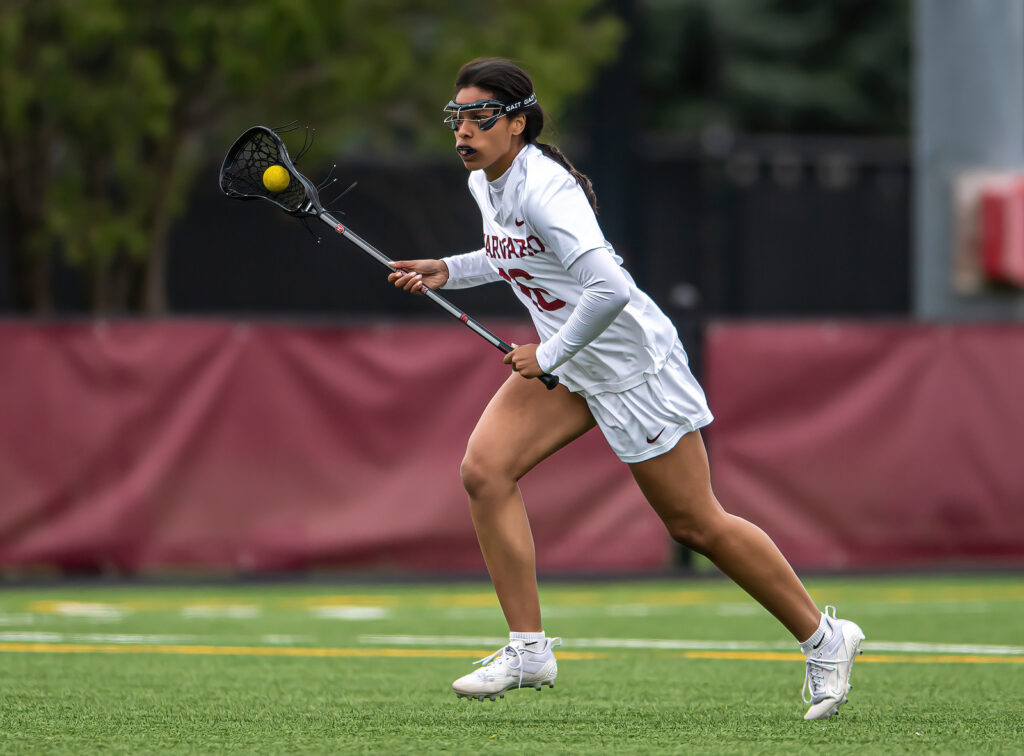
Growing up, sports gave me the chance to travel across the country and build friendships with people I never would have crossed paths with otherwise—an experience that has been one of the highlights of my life. Lacrosse, in particular, opened doors for me to receive an incredible education, setting me up for success both professionally and in life.

JOANNA SOLOWEY
Sports have been part of my life for as long as I can remember. My father instilled in me a love of baseball - and the Yankees, in particular (hence the #7 on my jersey) - from a very young age. In fact, my parents still joke that I learned to read by reading the box scores in The New York Times every morning.
I am incredibly hopeful my two young children will love sports as much as I do. Playing a team sport taught me so many critical life lessons - about myself, how to work with and depend on others, how to win and lose graciously - and I can’t wait for them to have those experiences too.
At a minimum, I am grateful my daughter has the opportunity to play softball from a young age (and not with the boys like I had to) and that, should she play, her batting helmet will come with a hole in the back for her ponytail!

CRISTINA VANDERBECK
I swam competitively till I came to the U.S. - I was part of the (Brazilian) state and even national team between 11-15 years old - funny enough one of my first trips to the states was for a swim camp in Fort Lauderdale when I was 12.
 English
  Spanish (LatAm)
  Portuguese